

In this article
A New Way Out: The Parachute Capsule
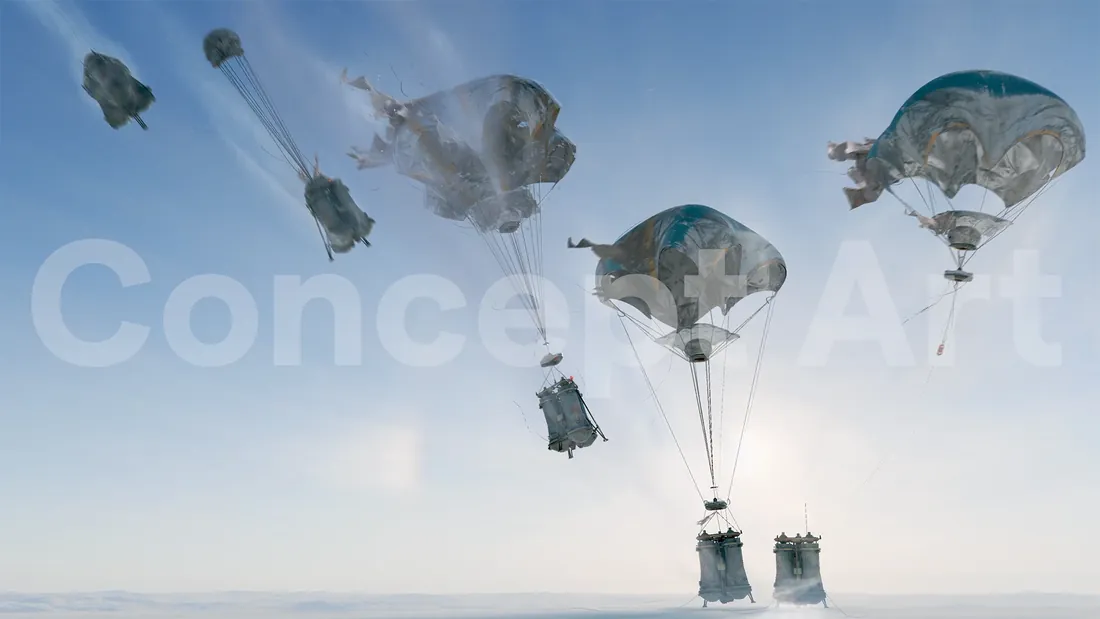
The most interesting few seconds of the episode go by without comment. The developers are explaining that Pendola Pass should feel like nobody has been there before: on the other maps you see shacks and graffiti, and "even the extractions feel like they've been here before", but "this place will feel different". At that exact moment, the edit cuts to this:
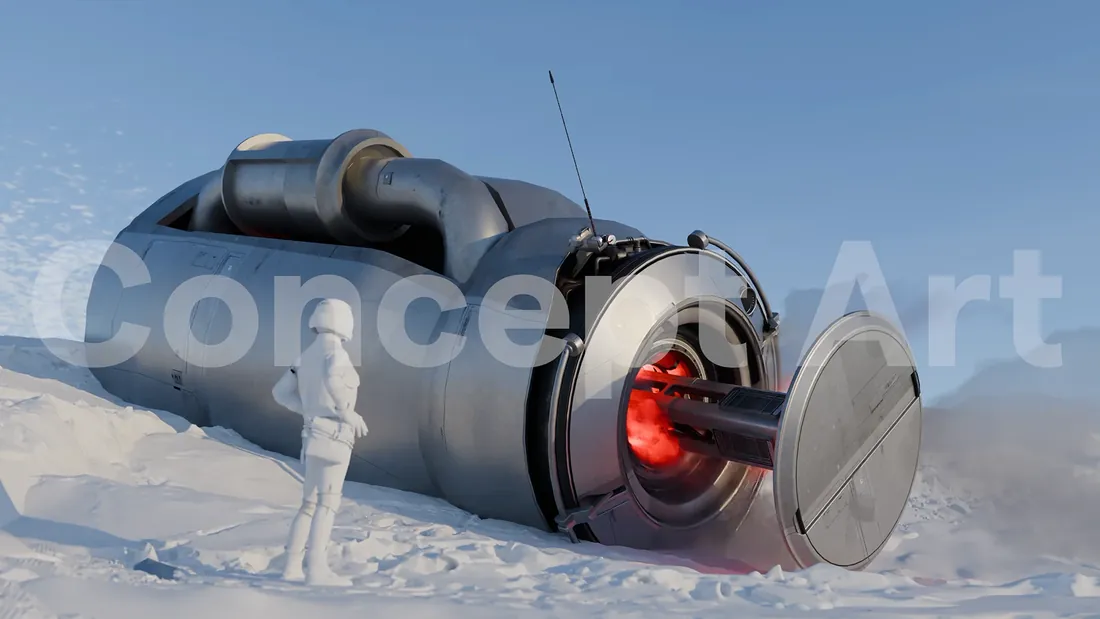
Embark's concept art shows the same idea: tall cylindrical pods coming down on parachutes over a snowfield. A second piece shows a large capsule lying in the snow with its hatch open and its engine glowing.
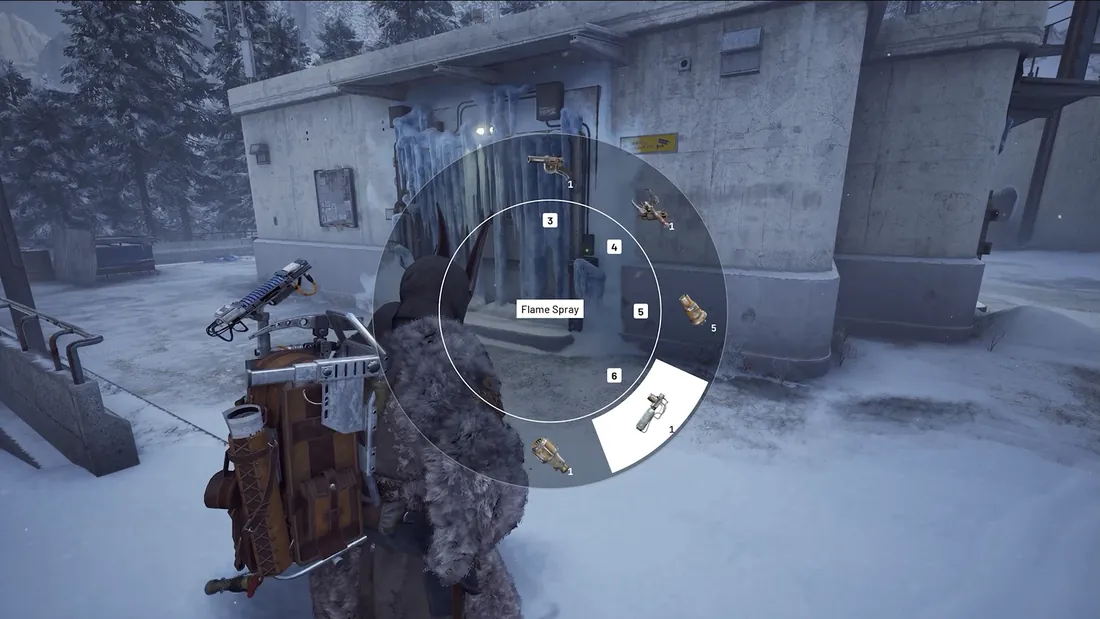
There may be a clue to how you call one in. In a separate shot of the quick-use wheel (the one used to melt a frozen door, further down), the top slot holds an item we haven't seen before: a short, wide-barrelled pistol that looks a lot like a real-world flare gun. The Raider carries one of them.
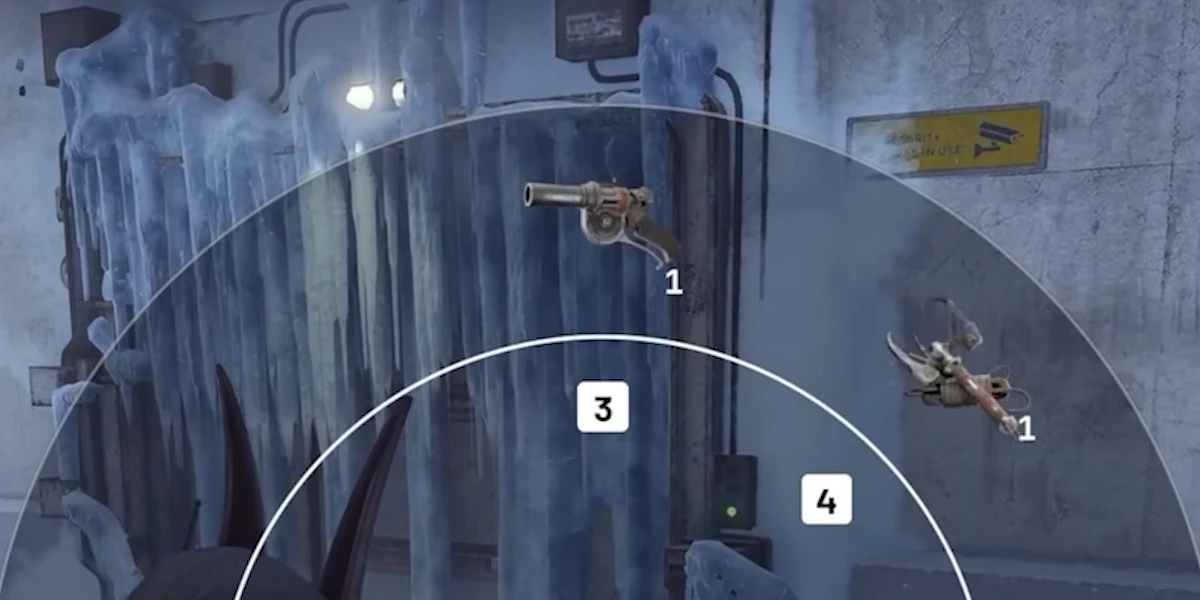
In the September Q&A, Embark said it was deliberately not revealing Pendola Pass's extraction method. Put the pieces together and this looks very much like it.
What the footage shows
- A capsule that arrives from the sky on a parachute
- A trail in the air behind it, visible from a long way off
- It lands in open terrain, not at a built extraction point
- It appears sized for a squad of three
Our read (unconfirmed)
- You call it in with a device you find, craft or collect, most likely the new flare pistol seen on the quick-use wheel
- It can land almost anywhere you call it
- A warm-up period before you can board, which gives other players time to come for it
- Once you're in, it launches like a rocket
This fits everything else the episode says about Pendola Pass. If nobody has been here before, there shouldn't be ready-made extraction elevators and hatches waiting for you. Our guess is that the usual extraction points are either missing, much rarer, or coming later, and that this capsule is the main way out.
The trail is the interesting part. An extraction you can drop almost anywhere would be too safe on its own, so the game tells the whole map where you are. Add a warm-up before you can board and you get the same tension as calling an elevator today, except other squads don't need to know the map to find you. They just look up. Expect fights over capsules, and expect players to camp near a trail and take a capsule someone else paid for.
None of this is confirmed yet. We'll update this section on October 8.
Pendola Pass: A Map That Wants You Dead
Embark expects Pendola Pass to be the game's largest map and "definitely the most complicated". The big new piece is an interior space unlike anything in the current maps. The whole update is pitched as the moment ARC appears at a scale we haven't seen before, both in how the world grows and in how the ARC threat escalates.
Inside the fallen Emperor
The Raiders follow a signal to one of the giant machines that until now were only visible far off on the horizon. Embark calls it a collector, and the community knows it as the Emperor. It has collapsed for reasons nobody knows yet, and much of the map is about exploring it. One of its legs, broken at the knee joint, is a centerpiece of the map, and the team wants it to make you feel tiny.
The team spent a long time discussing what the inside should feel like:
"It should feel almost like it's digesting resources that have been taken up, that you're sort of in the belly of something. Hostile in a way. Exciting and sort of a little bit scary."
The framing is about Raiders taking the initiative: going in to interrupt ARC's operation and profit from it. One developer compared it to a train robbery. That fits what the Q&A confirmed: the fallen Emperor is one of only two sources of Amplification Modules.
What we've seen inside is human-made
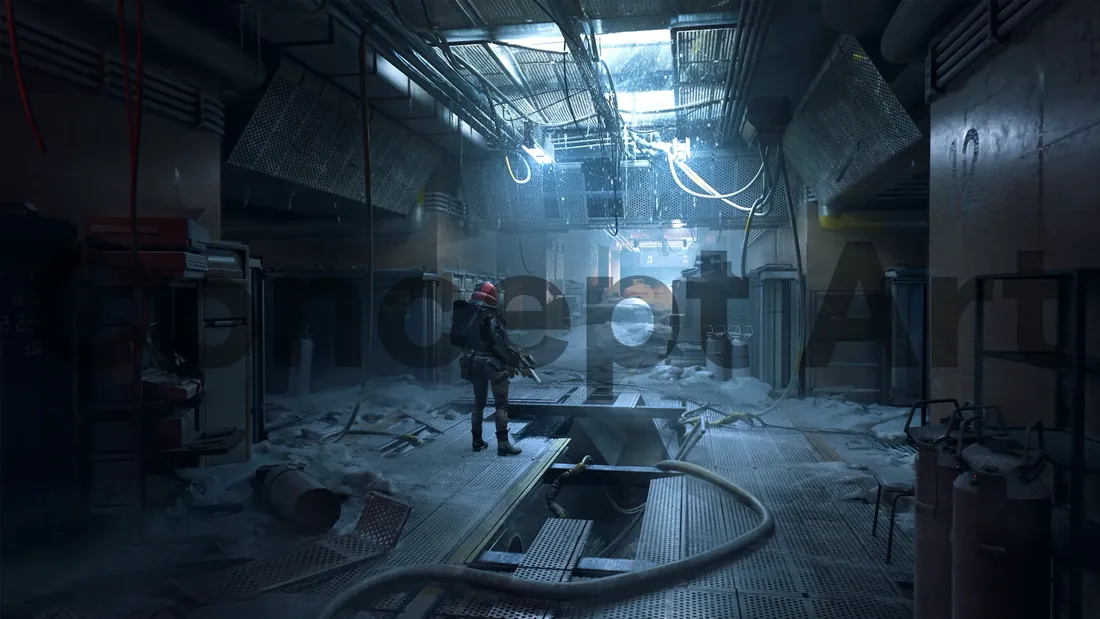
Notice what the episode doesn't show. Every interior in it, concept art and gameplay alike, is plainly human-built: steel grating, cable runs, gas cylinders, office chairs, old computers. None of it looks alien, and alien is exactly what the team says the Emperor's insides should feel like. Our read is that these spaces belong to Pendola Pass's research compound, the science facility among the pines from the First Look footage. The Emperor's interior looks like it's being kept as a mystery until launch.
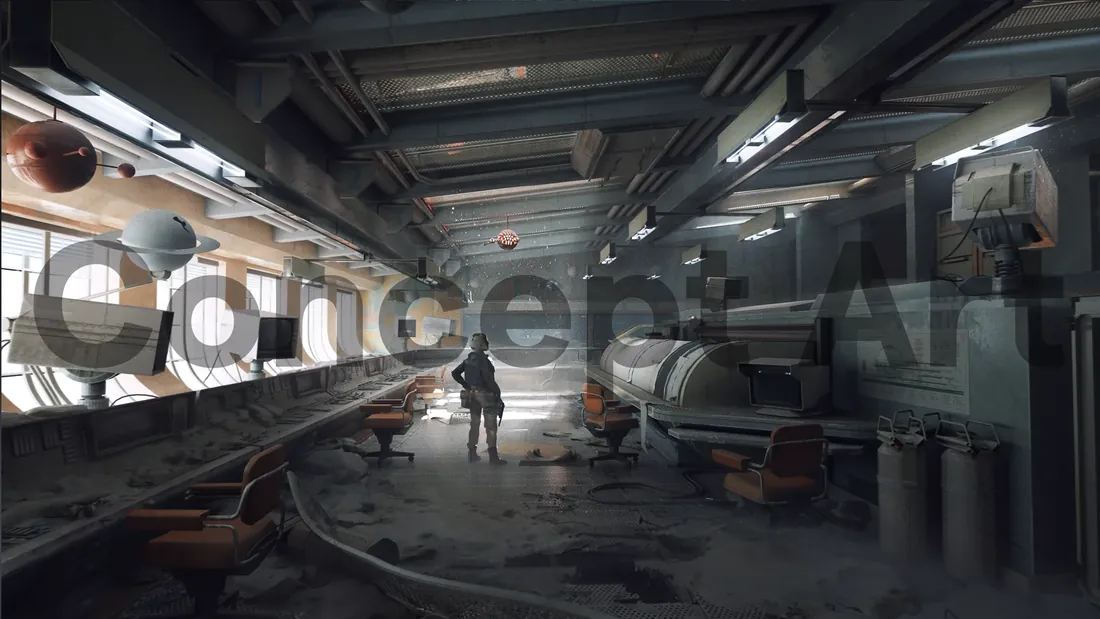
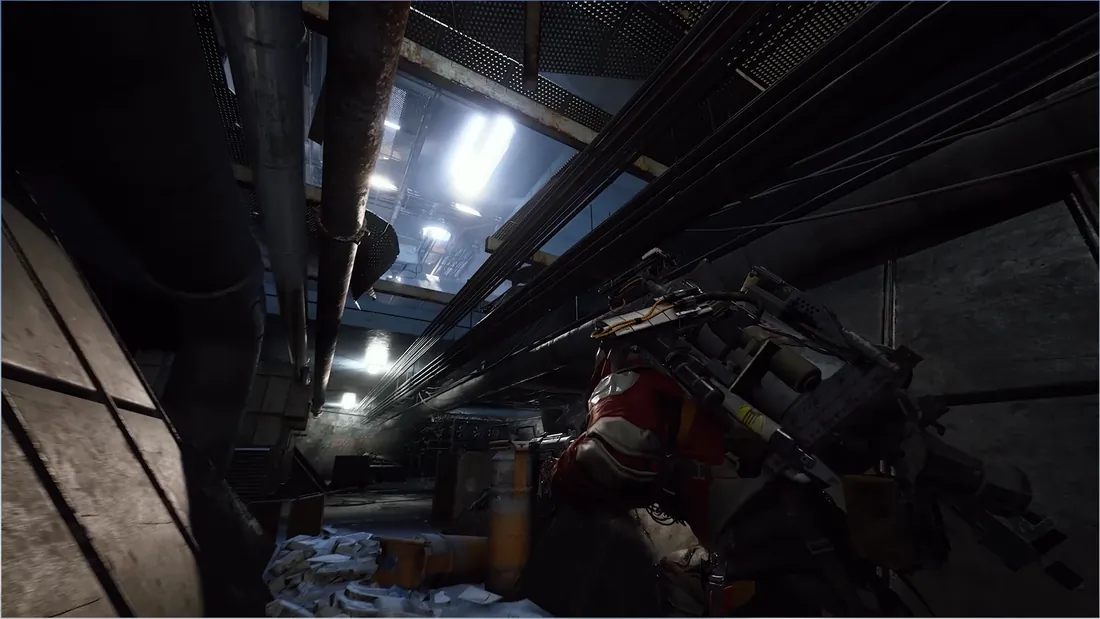
Scanned in the Alps
One of the brief's requirements is that the map should feel like "the world is actually trying to kill you", with the weather and climate as the threat. To get there, Embark sent a group of artists to the Alps on a photo-scanning trip, capturing real materials to turn into 3D assets. The aim was to make something new rather than "just another ARC Raiders map".
The way the team contrasts it with Cold Snap is a useful way to read the map. Cold Snap asked "what if it snowed in Naples?": snow that would melt within an hour. Pendola Pass is modelled on the Dolomites, where snow stays for six months. The houses and infrastructure are built for that climate, and Embark expects players to notice the difference immediately. The frost gameplay introduced with Cold Snap is meant to "really shine" here. In practice that means the flash-freeze storms, shelters and frozen doors the Q&A described. The freeze is not a map condition. It's a feature of the map itself, a Cold-Snap-style frozen front that moves across Pendola Pass from one side to the other, so expect it whatever condition is running.
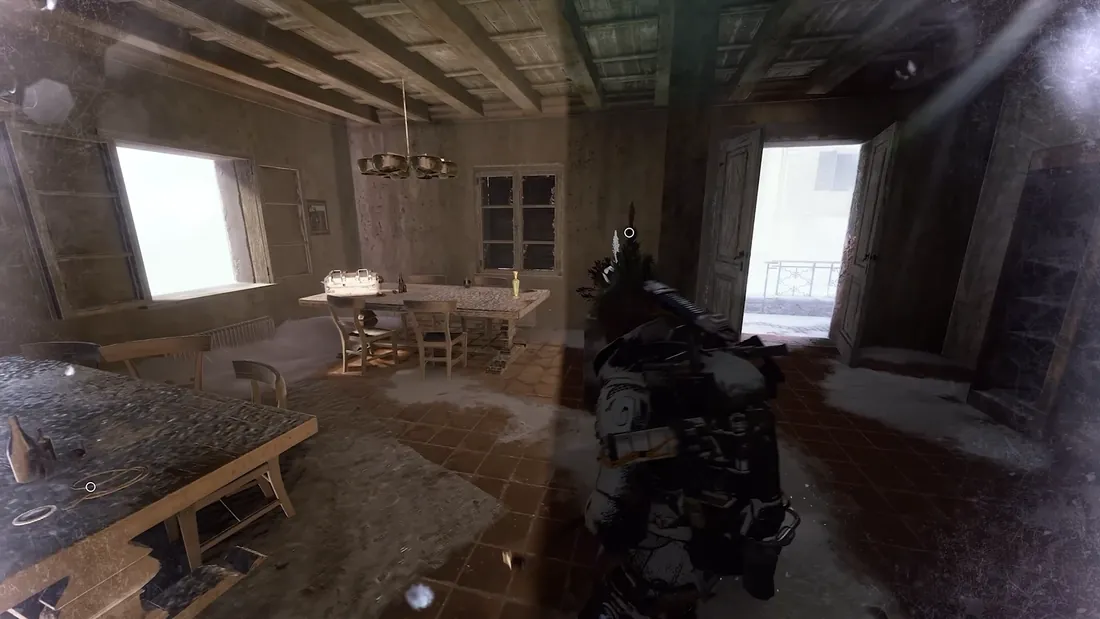
You are the first one here
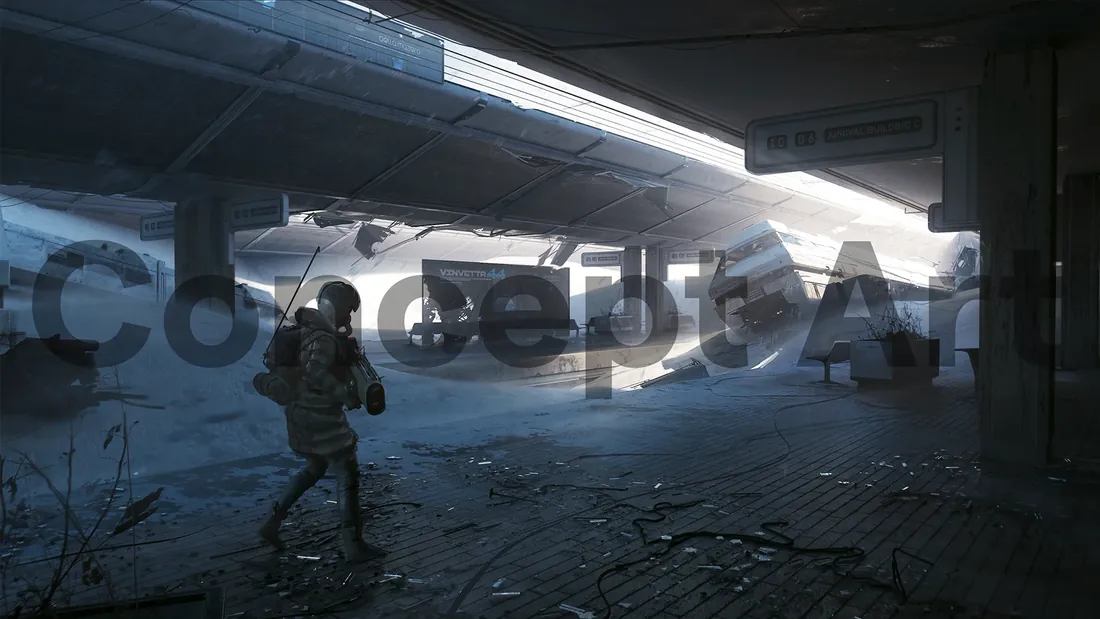
The other maps show a long Raider presence: shacks, graffiti, extraction points that look well used (which is where the capsule clip above comes in). Pendola Pass is meant to feel like you are one of the first people ever to go there. Visually, the team points back to Dam and Spaceport: lots of negative space and concrete, with a new take.
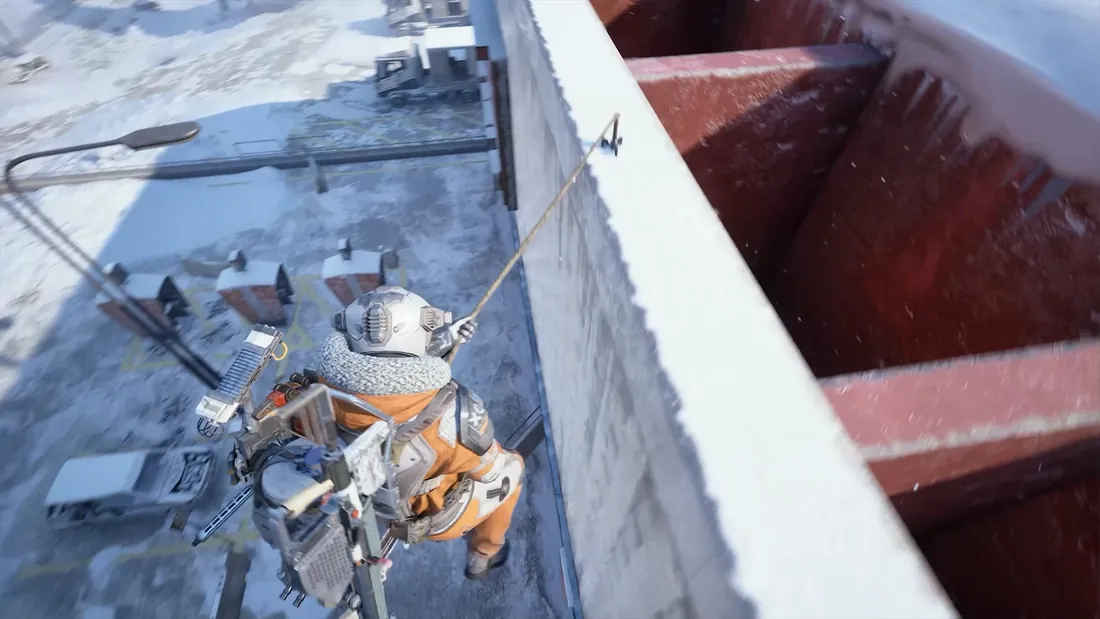
"No Raider presence" is a level-design statement, not just set dressing. On the older maps, the graffiti and shacks quietly teach you the routes. Without them, the first weeks on Pendola Pass will be about learning the layout the hard way, and that's exactly when an interactive map is most useful. Ours goes live on the Pendola Pass page at launch.
The Bully: A New Kind of ML Brain
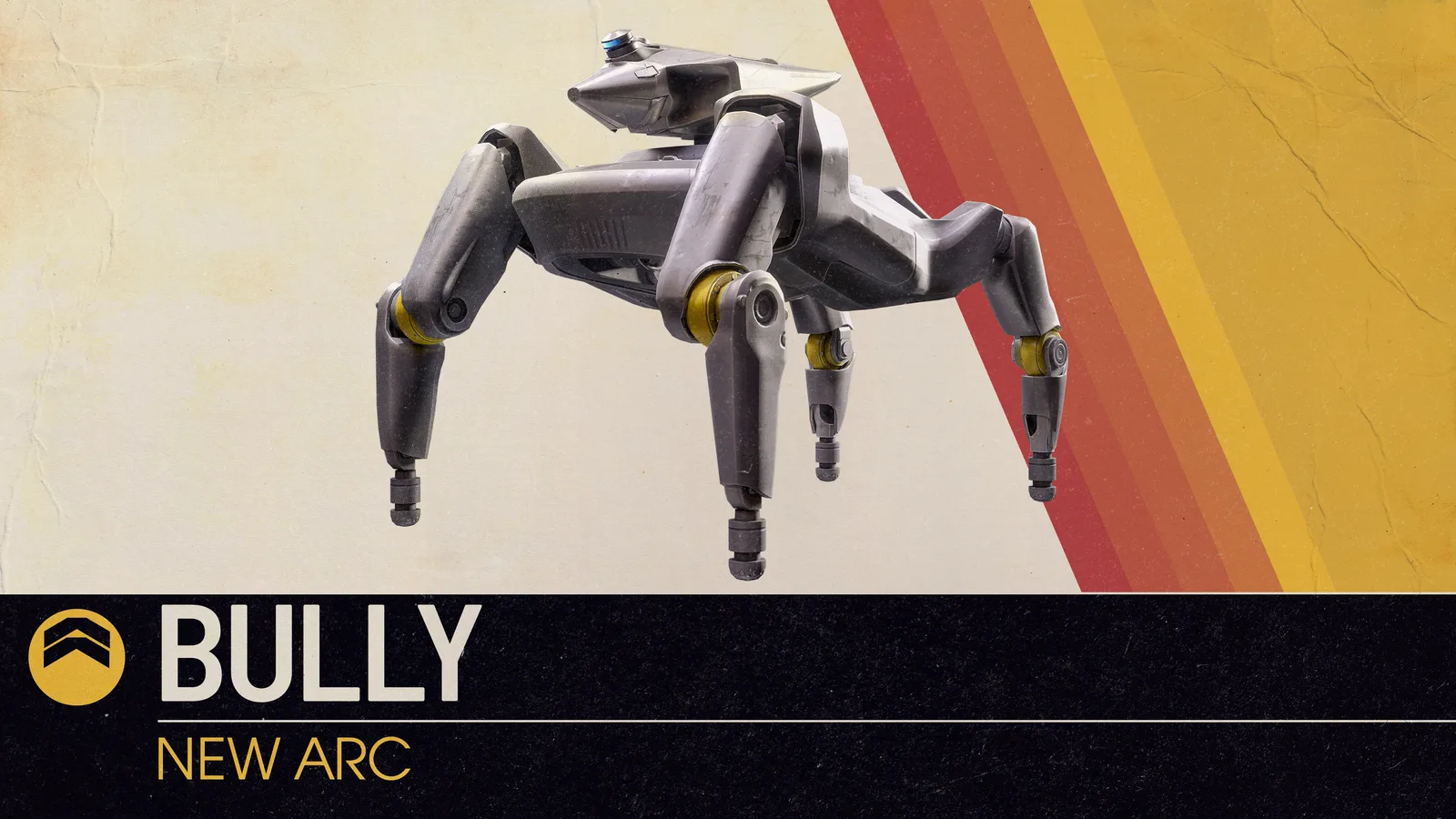
Frozen Trail adds several new ARC. The Skulker was once described to the interviewer as "a Roomba with a shotgun". But the episode focuses on the Bully, because it marks a step forward for Embark's machine-learning team.
A quick recap: instead of hand-animating every movement and scripting rules for how it moves, an ML-driven enemy learns how its own body works. It is trained in simulation for huge amounts of time until it can move well. It's closer to teaching a real robot to climb stairs than to animating one for a movie. The Leaper is the best current example. The Bully is the second ML enemy, but it needed a completely different set of "brains", because its body works differently.
Leaper
Existing ML enemy- Symmetric: moves forward and sideways equally well, and can strafe
- Its strength is verticality: it leaps at you, lands, and causes chaos
- Can stop fast, turn around and jump sideways
Bully
New in Frozen Trail- Quadruped: built to move forwards and backwards, "like a dog or a gorilla"
- Fights with hit-and-run bull rushes
- Carries forward momentum, so it can't stop on a dime
How it fights
The developers walk through its attack loop. It spots a target from long range, heads straight for you and fires a canister-shotgun blast. Then it runs away and circles back for another pass. It doesn't plan to stand still, so you need to be ready for its return.
"You'll be able to dodge roll and then it will be gone for like 4 seconds while it turns and comes back at you. So that changes the dynamic of the fight a whole lot."
The head is where the team made it feel robotic instead of animal. It is effectively split in two. The lower half holds a responsive 360° eye that finds targets fast. The weapon on top follows more slowly. That gap is a deliberate telegraph: you see that it has spotted you before the gun comes round. The team was also clear that, unlike some ARC, you shouldn't feel sorry for this one. It is meant to be very dangerous.
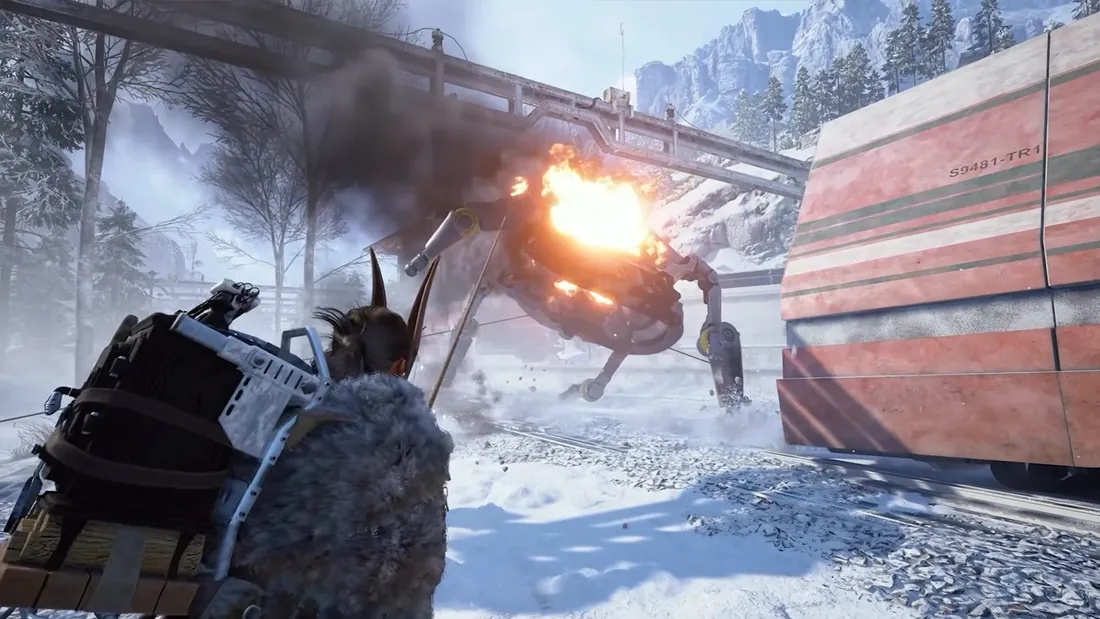
Tethering big ARC, limb by limb
This shot is worth a closer look. Frozen Trail adds tether gadgets that pin a target to a fixed point with a wire. The First Look introduced them as the Tether Launcher and Yank Grenade. Here, the lines run from different legs of the Bully to different anchor points, so it isn't tied down as one object. Each limb is pinned on its own, and it's stuck in place long enough to eat an explosive.
That matters more for the Bully than for most ARC. Its whole threat is momentum: charge, shoot, run off, come back. A tether that kills the charge turns a hit-and-run enemy into a stationary target.
The obvious next question: can you tether a Queen's or a Matriarch's leg? If tethers attach per limb, nothing in this shot says they're limited to small ARC. Pinning one leg of a Queen to the ground while your squad focuses its weak points would be a genuinely new way to take on the biggest ARC in the game. Until now, those fights have mostly been about cover, burst damage and staying out of the stomp. Embark hasn't said whether bigger ARC can break free, ignore tethers, or need several lines, so treat this as a hope, not a confirmed tactic. It's the first thing we'll test on October 8.
Bully counterplay, from the developers
- Stop it in its tracks. The designers specifically mention mines and that kind of toolbox, and the episode shows a Bully with its legs tethered in place. Plan for it before it reaches you.
- Dodge roll through the charge. Its momentum carries it past you, and you get roughly four seconds while it turns.
- Watch the eye, then the gun. When the eye locks on, the shot is coming. Use the delay to break line of sight or roll.
- Expect a second pass. A Bully that runs off hasn't given up. It's lining up the next run.
This lines up with the Q&A, where the Bully's canister shot was described as having fast damage falloff. Its whole plan is to close the distance, so distance and timing are your friends. If you're bringing gadgets to Pendola Pass, a tether gadget, a couple of mines or a trap on your retreat line will probably earn their slot faster than an extra grenade.
Outposts: The First Step Off the Rust Belt
The longer update cycle let the team tackle larger features. Raider Outposts are the biggest progression system in Frozen Trail. They give you a home outside the Rust Belt, and the episode frames them as part of the story:
"We need to start figuring out how to reclaim larger portions of the surface. And the outpost is the first step in trying to see what it could be when we go outside of the relative safety of Speranza."
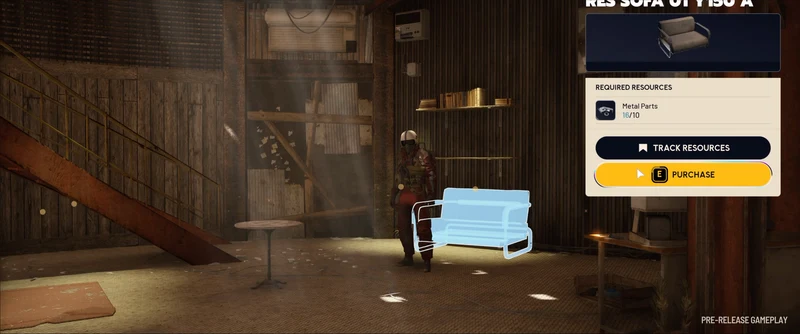
- Self-expression: as many creative choices as possible for how your Outpost looks, decorated with items you find in raids.
- Crafting expansion: new stations and new mechanics, plus new items and weapons and new ways to use them.
- Endgame chase: the explicit target is players who have hit the cap of the current progression. Returning veterans should find meaningful new goals, and the system should still sit cleanly on top of a new player's experience.
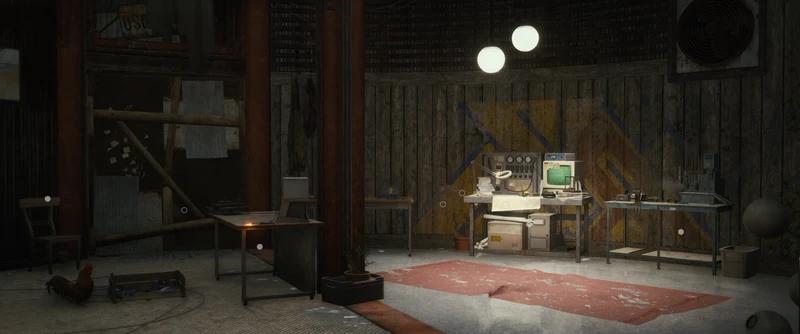
The narrator stresses that this version of Outposts is very much a first step. Even six months wasn't enough to get everything into its final form. For the concrete launch details (unlocked through a project, rooms expanded with materials, no visitors yet), see the Outposts section of our Q&A recap.
The Frigate: Level or Enemy?
The Frigate is the part of Frozen Trail Embark has shown the least of, and the one the episode is most curious about. The crew happened to be filming on the day the team first jumped into a server to test it, on one of the existing maps. The narrator calls it unlike anything they had seen in the game before. When the test ended, the team had a long list of problems to solve.
The interviewer asked the obvious question: is the Frigate level design or enemy design? The answer: "Yes, it is."
That answer makes sense once you know what the Frigate is. It isn't a map. It's an ARC vessel that invades a map, which is why the first test could run on an existing map. Once it arrives, it's a place you board and explore, and it's also a hostile machine full of ARC like the Hydra turret. That's level and enemy at once.
The challenges the developers listed:
- Sound. If something that huge makes no sound, it doesn't feel huge. If it's too loud, players complain they can't hear footsteps. The team has to make you feel its presence without drowning out the audio you use in PvP.
- Multiplayer orchestration. They described it as "the biggest thing we've tried to orchestrate ever", which is a technical challenge on its own.
- Player interaction. What happens with hostile players up there compared with friendly ones? What should the design encourage or discourage in that situation?
A raid in the middle of a raid?
Embark hasn't explained how a Frigate run actually plays. The comparison going around among content creators is the Cryo Archive in Marathon: you board, unlock sections one by one, and work up to a boss fight that guards the best loot at the end. Creators call it "raid-like", borrowing the term for Destiny 2's multi-stage endgame activities. This is community speculation, not something the episode confirms.
The "yes" answer explains a lot. The Frigate is something you board and fight through, home to the Hydra turret and one of the two Amplification Module sources. A staged structure with a boss and a loot room at the end would fit that role, and it would also explain the developers' worry about hostile and friendly squads meeting on board. Unlocking a section only to have another squad walk in behind you is exactly the kind of moment they're trying to design for. The Frigate is also excluded from the PvE toggle test, which makes more sense now that we know how much of its design depends on what happens when two squads meet on deck. As of our last look at the game files, no Frigate model or level had shipped, so it should be the one part of the update that is completely new on October 8.
The Six-Month Bet
The episode ends on the bigger picture. Six months is a long time between major updates for a live game. Frozen Trail is where Embark finds out whether the slower, bigger cadence was the right call. The team expects the live-game safety net to stay: features that don't quite work can be fixed, and anything underbaked can go "back in the oven". But the date is fixed. Frozen Trail launches on October 8, ready or not.
One developer's closing thought on designing for players who will see through everything:
"You always have to live by the understanding that your audience are way smarter than you think. They're going to figure out how these things all connect. You need to make it enough of what they think it is, but also provide enough things that are surprising, or maybe slightly start pulling out the rug from under their feet."
The episode is less a feature list than a statement of intent. Pendola Pass is unexplored territory, Outposts are the first step beyond Speranza, and the Frigate is a level that fights back. Together they point toward a game that is moving out of the Rust Belt. The quote at the end is fair warning too: the official trailers have shown a lot, but expect at least one thing on October 8 that nobody predicted.
FAQ
How do you extract on Pendola Pass?
Embark hasn't explained it yet. The episode shows a capsule dropping in on a parachute with a trail in the sky, and concept art shows the same pods. It looks like a called-in extraction, but how it works is unconfirmed.
Is Pendola Pass the biggest map in ARC Raiders?
Embark expects it to be the largest and the most complicated, with a new kind of interior space inside the fallen Emperor.
How do you beat the Bully?
Stop its charge with tethers, mines or traps, dodge roll through it to buy about four seconds while it turns, and use the delay between its eye locking on and its weapon turning to get out of the way. Expect it to circle back.
Can you tether a Queen or Matriarch?
Unconfirmed. The episode shows tether lines attached to individual legs of a Bully, which suggests tethers work per limb, but Embark hasn't said whether they work on the biggest ARC.
How is the Bully different from the Leaper?
Both use machine-learned movement, but the Leaper is symmetric and agile in every direction, while the Bully is a forward-moving quadruped that bull-rushes and can't stop quickly.
What are Outposts for?
A customisable base outside the Rust Belt with new crafting stations and mechanics, aimed at endgame progression. Embark calls it the first step in reclaiming more of the surface.
Is the Frigate an enemy or part of the map?
Both, but it isn't a map. It's an ARC vessel that invades a map: you board and explore it like a level, and it fights back like an enemy. Embark says it is the biggest thing it has ever tried to orchestrate in multiplayer.
Getting ready for October 8? Read our Frozen Trail First Look, the dev Q&A recap and the Reward Pass explainer.
See you Topside, Raiders.
— Arc Raiders Hub